



Every developer says they want speed, but few projects are actually planned in a way that delivers it. Real fast track construction Saudi Arabia developers can rely on is not about rushing a conventional build — it is about restructuring the programme so that work which normally happens in sequence happens at the same time instead. Understood this way, fast-tracking is less a marketing promise and more an engineering and logistics discipline that has to be planned deliberately from the very first project meeting.
What Fast-Track Construction Means in Practice
Fast-track construction overlaps design, procurement and construction phases that a traditional programme would run one after another, starting site works before every design detail is finalised and starting production before site works are complete. Done well, it compresses total delivery time significantly. Done without the right delivery method behind it, it mostly just moves risk around rather than removing it — a lesson many developers learn the expensive way on a conventional site where trades were simply compressed onto a tighter calendar without changing how the work itself was organised.
How Modular Precast Enables Fast Track Construction Saudi Arabia Developers Need
Precast is one of the few delivery methods that genuinely supports fast-tracking, because it restructures the construction sequence itself rather than just compressing the same sequence into less time.
Parallel Workstreams: Factory and Site Together
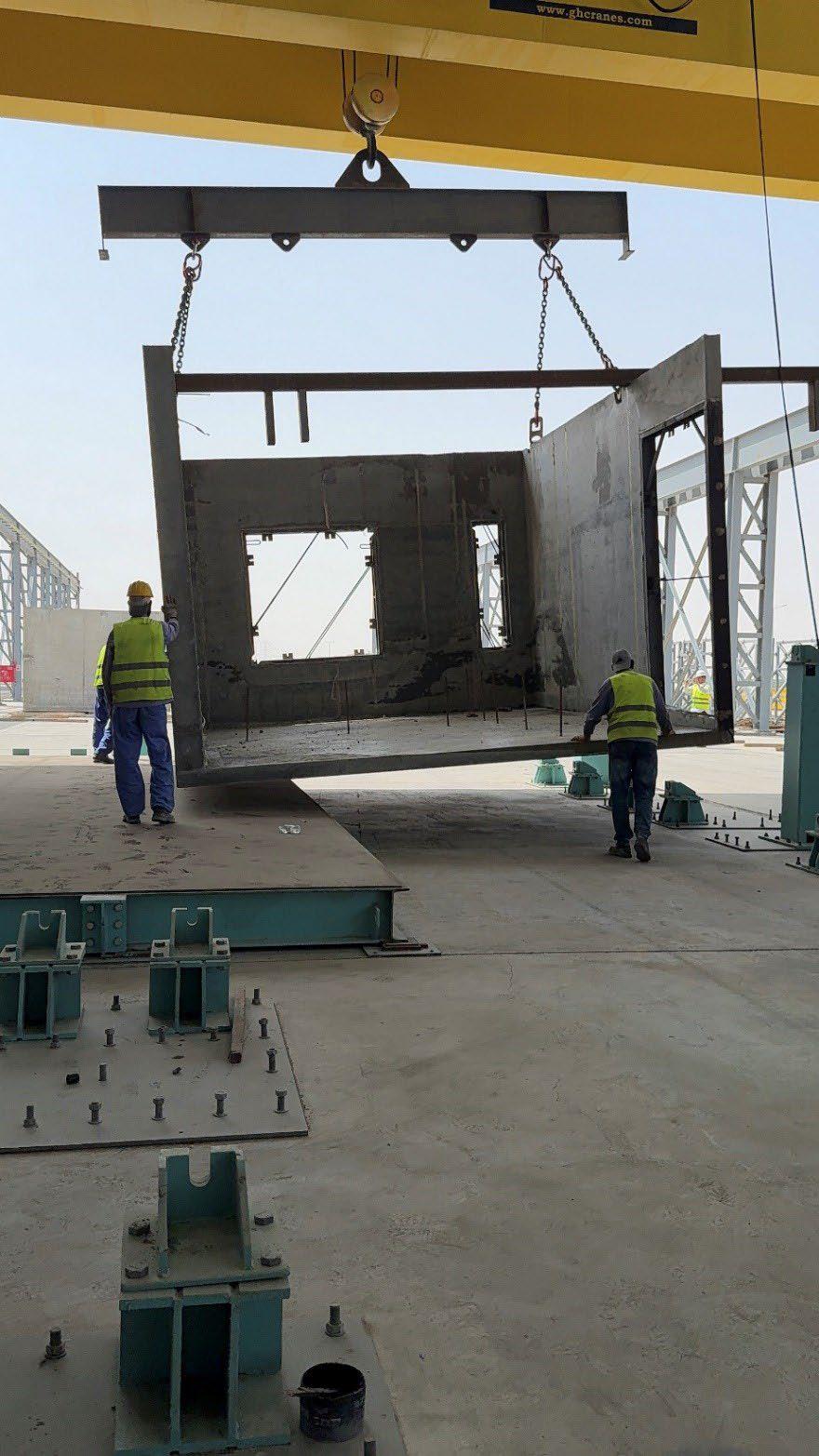
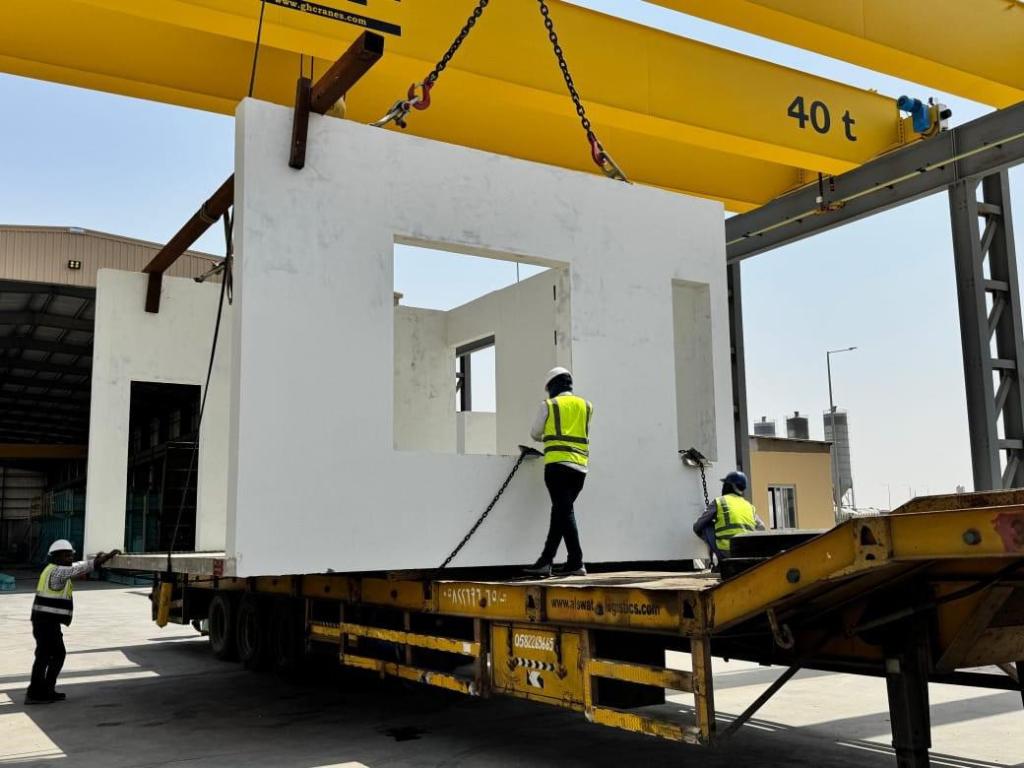
Once shop drawings are approved, factory production of panels, slabs or 3D modules can proceed independently of site progress, while the site team runs earthworks, foundations and utilities on its own track. The two streams only need to converge at installation, which means weeks or months of what would otherwise be sequential site-based construction happen in parallel instead.
Fewer Trades, Fewer Handover Delays
A conventional structure passes through formwork carpenters, steel fixers, concrete crews and finishing trades in sequence, with a handover delay built into every transition. Precast collapses several of those trades into a single factory process and a single installation crew, removing a meaningful share of the handover friction that slows a traditional site down.
Where Fast-Track Delivery Matters Most
Fast-track precast delivery has the most impact on developments with hard external deadlines — hospitality projects tied to pilgrim season openings, infrastructure needed ahead of a facility’s operational start date, and residential compounds where every month of delay carries direct financing cost. It also matters on any project where repetition is high enough that factory production can genuinely outpace a conventional site sequence. Even on projects without a single hard deadline, the financing savings from a shorter overall programme are usually enough on their own to justify the extra planning discipline fast-tracking requires.
Planning a Fast-Track Programme: What Has to Happen Early
Fast-tracking only works if design decisions that precast production depends on are locked early — structural grid, panel or module sizing, connection details and finishes. Bringing a precast contractor into the design conversation at concept stage, rather than after drawings are finished, is what actually makes a fast-track programme achievable rather than aspirational.
Risks of Rushing Fast-Track Construction Without the Right Partner
Fast-tracking with a contractor who lacks in-house engineering, owned production capacity or a proven installation crew tends to shift risk rather than remove it — design changes made late in production can be expensive or impossible to accommodate, and coordination gaps between a design consultant, a factory and a separate installation subcontractor can erase most of the time saved elsewhere. A single-point-of-accountability contractor, carrying engineering, production and installation under one roof, is what actually protects a fast-track schedule.
Realistic Timeline Expectations
The scale of the time saving depends heavily on repetition and how early the precast contractor is engaged — highly repetitive villa or staff housing programmes engaged early typically see the largest compression, while one-off or late-engaged projects see a more modest benefit. Any contractor promising a fixed percentage timeline reduction without seeing your drawings first is giving you a marketing number, not an engineering one.
Measuring Progress on a Fast-Track Programme
A fast-track schedule is only useful if progress against it is tracked accurately, since the whole point of overlapping design, production and site work is to catch slippage early enough to correct it.
Production Milestones vs Site Milestones
Track factory production progress — panels or modules cast, quality-checked and ready for delivery — as a separate line from site installation progress, since a healthy production pipeline with a stalled site sequence (or the reverse) points to a specific, fixable bottleneck rather than a vague “we’re behind” status.
Weekly Coordination Between Factory and Site Teams
Because production and site work run in parallel rather than sequentially, regular coordination — ideally weekly — between the factory scheduling team and the site installation team keeps delivery sequencing matched to actual site readiness, preventing the common failure mode of elements arriving before the site is prepared to receive them.
Frequently Asked Questions About Fast Track Construction Saudi Arabia Developers Use
How Much Time Can Fast Track Construction Saudi Arabia Projects Actually Save?
The exact saving depends on repetition, design lock timing and site logistics, but overlapping factory production with site groundworks consistently removes months from a project’s critical path compared with a fully sequential traditional programme.
Does Fast-Tracking Increase Risk of Errors?
It can, if design decisions are rushed rather than genuinely finalised before production starts. The risk is managed by locking key design decisions early and working with a contractor whose in-house engineering can absorb necessary changes quickly rather than passing them through an external consultant.
Is Fast-Track Construction Suitable for Government or Giga-Project Tenders?
Yes, and it is increasingly expected on projects tied to fixed public deadlines, provided the contractor can document a realistic, engineering-backed schedule rather than an optimistic marketing timeline.
Building a Fast-Track Programme With SHB
SHB carries civil works, precast and 3D modular production, and installation under one contract specifically so that fast-track programmes have a single accountable partner rather than three separate ones to coordinate. Bring SHB into your project at concept stage for a realistic fast-track timeline assessment based on your actual drawings and scope.
