




Why industrial developers in Dammam are moving to precast
An industrial project earns money from the day it starts operating. Every month a factory or warehouse spends on site before handover is a month of lost production, delayed rent or postponed sales. This is why more developers in Dammam are asking for precast concrete from the design stage, not as a fallback when site labour runs short.
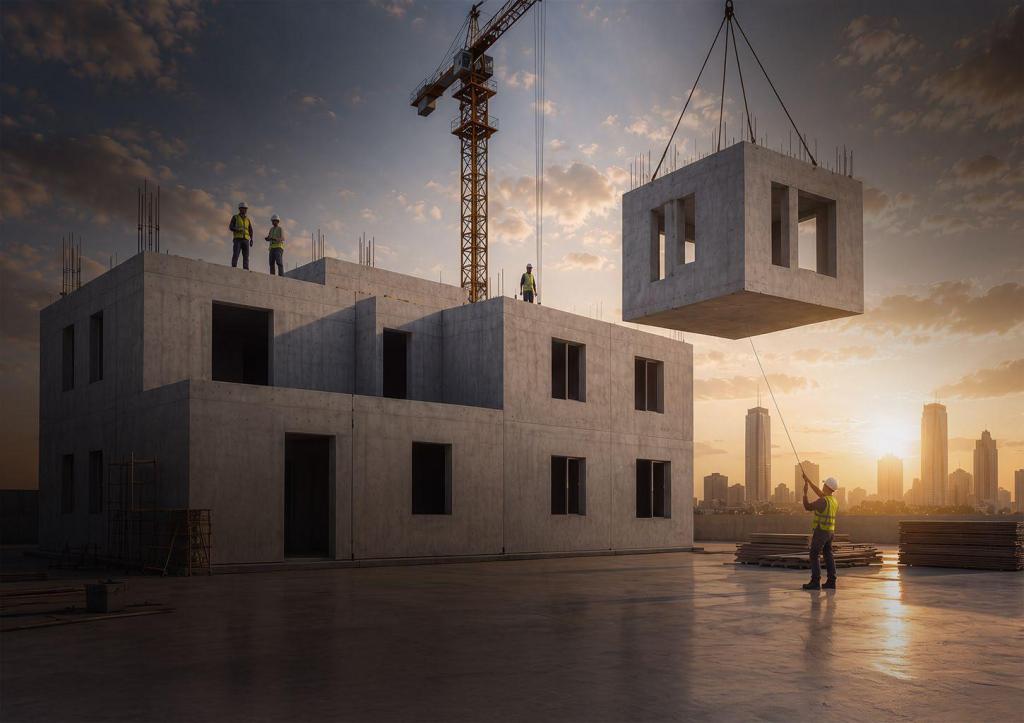
Precast concrete is cast in a controlled factory, cured under known conditions, transported to site and fixed in place. The site then becomes an assembly area rather than a casting yard. For industrial buildings, where wall panels, columns, beams and floor slabs repeat across large areas, that shift changes the schedule more than most other decisions.
What precast changes on an industrial site
With cast-in-place work, each element waits for formwork, reinforcement, pouring, curing and stripping. Weather, labour availability and the order of trades all add delay. With precast, the same elements are produced while groundworks and foundations are still being prepared, so the building frame can rise in a fraction of the time.
The benefits that matter to an industrial client are practical:
- Shorter programme: the frame, walls and slabs go up in continuous sequences rather than waiting for each pour to cure.
- Consistent quality: factory conditions and repeatable moulds reduce variation in dimensions and surface finish.
- Less site congestion: fewer workers, fewer deliveries of loose materials and less temporary works around the building.
- Earlier fit-out: once the envelope is closed, internal trades can start while other parts of the frame are still being erected.
Typical precast elements for factories and warehouses
Wall panels and cladding
Large precast wall panels form the external envelope of many industrial buildings. They can carry insulation, incorporate windows or openings, and be finished to a consistent colour. For a warehouse with long elevations, panels reduce the number of joints to seal and the amount of brickwork to build on site.
Columns, beams and frames
Precast columns and beams create the structural frame. Connections are designed so that the frame can be erected quickly and reach stability without long propping periods. Your structural engineer will confirm the connection details and the lifting plan for each element.
Hollow core slabs
Hollow core slabs are pre-stressed units with continuous voids that reduce weight while keeping strength. They are a common choice for mezzanine floors, roofs and office areas inside industrial buildings, and they reduce the amount of temporary formwork needed.
Loading docks and external elements
Loading docks, ramps and retaining walls can also be precast. Installing them on the same production run as the main frame helps keep the project on one delivery schedule.
Coping with Dammam’s climate
Dammam combines high summer temperatures with coastal humidity and airborne salt. Each of these affects concrete. Hot weather speeds up water loss and can cause cracking if the mix and curing are not controlled. Salt-laden air increases the risk of corrosion in reinforcement if cover and concrete quality are inadequate.
Factory production handles much of this risk. Mixes can be designed for the local exposure class, curing can be carried out in shaded or controlled areas, and concrete cover can be checked before each element leaves the yard. On site, the remaining work is joint sealing and fixing, which can be scheduled around the hottest hours of the day.
Planning the programme: where the time is saved
The biggest time saving comes from overlapping work. While the precast yard produces one batch of panels, the foundation contractor can complete the next building. Once the first elements are erected, the crane can move to the next zone. A good programme shows these overlaps clearly and identifies the critical path, which is usually the delivery of the first batch of elements.
Ask your precast supplier for a production schedule that is linked to your site programme. It should show casting dates, curing periods, transport bookings and erection sequences. If the supplier cannot show these, the programme will rely on assumptions that may fail once the project starts.
Quality, compliance and inspection
Precast concrete in Saudi Arabia is designed and built to the Saudi Building Code requirements for concrete and the loads that apply to the building. Check the current edition of the code with your structural engineer, and confirm that the precast supplier follows a documented quality system that includes mix control, cube testing, dimensional checks and traceability for each element.
Inspection is faster in a factory because the elements can be checked before they are delivered. This reduces the number of defects discovered during erection, and it gives the client a clear record of what was supplied.
Cost: what to compare
A precast price should not be compared with a cast-in-place price only on the cost of concrete. The full comparison includes formwork, labour, crane time, preliminaries, site overheads and the cost of delay. A precast package that shortens the programme by several weeks can outweigh a higher unit price, especially when rent, financing or lost production are involved.
Also compare the transport distance. Precast elements are heavy and large, so the factory location and the route to site affect both cost and risk. A supplier located near Dammam and the Eastern Province is often more competitive for this reason.
Questions to ask a precast supplier before you commit
Before you award a precast package, ask the supplier to confirm:
- Which element types they produce in-house, and which they buy in.
- How they design connections and who checks them.
- What their production capacity is per week, and how it is shared between projects.
- How they protect elements during transport and storage.
- What quality records you will receive, and when.
These answers show whether the supplier can support your programme, not only whether they can quote a price.
Next steps for your industrial project
If you are planning a factory, warehouse or commercial building in Dammam, start by sharing the building layout, the loads and the target completion date. A precast design review at the early stage can identify which elements benefit most from factory production and which should remain cast on site. That review is the fastest way to turn precast from an idea into a programme you can rely on.
