

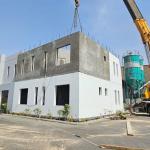




Why hotel projects in the holy cities need a different construction plan
A hotel in Makkah or Madinah is built to a calendar that the market sets, not the contractor. Pilgrim seasons, religious events and occupancy peaks all shape when the building must open. A delay of a few weeks can mean missing the season that justifies the investment.
The site is also demanding. Urban plots are often tight, deliveries are restricted to certain hours, and neighbouring buildings and roads need protection. Each of these pressures favours a construction method that moves work away from the plot and into a controlled factory.
Precast concrete does that. Walls, slabs, columns and many bathroom and service units are produced in a yard and delivered when they are needed. The site work becomes a sequence of lifts and fixings, which is shorter, quieter and easier to plan around the restrictions.
The benefits that matter to a hotel owner
Hotel owners care about three outcomes: an opening date they can sell, a building that performs for decades, and a cost they can finance. Precast supports all three.
- Earlier opening: the frame and envelope can rise faster, so the fit-out and furnishing start sooner.
- Repeatable quality: guest rooms repeat across floors, and factory moulds keep dimensions consistent from the first floor to the last.
- Less disruption: fewer trucks of loose materials and less noise on the busiest streets.
- Better sound and fire performance: thick precast walls and slabs offer sound insulation and fire resistance when they are correctly detailed.
Precast elements for a hotel building
Structure and frame
Precast columns, beams and floor slabs form a frame that can be erected floor by floor. Hollow core slabs are often used for guest room floors because they span well, reduce the weight of the building and provide a flat soffit for services.
Walls, partitions and cladding
External precast panels can carry insulation, windows and a finished façade in one element. Internal walls between guest rooms can be precast to provide sound separation, which is a key comfort factor for guests.
Bathroom and service units
Bathroom pods and service risers are a strong fit for precast or modular production. Plumbing, tiling and fittings can be installed in the factory under controlled conditions, then delivered and connected on site. This reduces the number of trades working in the same room and shortens the finishing stage.
Working within the restrictions of the holy cities
Projects in Makkah and Madinah operate under strict rules for site management, traffic, noise and working hours. Your main contractor and the relevant authorities will set the conditions. Precast helps you comply because most of the noisy and heavy work happens in the factory, and the site work can be concentrated into agreed windows.
Plan the delivery route early. Large precast elements need a clear path, enough turning space and suitable lifting points. A logistics plan agreed with the authorities before the first delivery avoids costly holding periods.
Programme and phasing for a hotel opening
Hotels rarely open in one step. Guest rooms, public areas, kitchens and back-of-house spaces often have different readiness dates. Precast allows phasing: a first block of rooms can be completed and handed over while the next block is still in production or erection.
Ask the precast supplier to show the production programme linked to your opening date. The schedule should show when each element is cast, when it is delivered, and when the fit-out contractor can start in each zone.
Quality, durability and maintenance
Hotels operate every day of the year, so durability and maintenance access matter. Precast elements made in a factory typically have consistent concrete quality and cover, which helps the building resist moisture and corrosion over time. Joints and connections are the areas to check in design: they should be detailed to allow movement, seal well and be accessible for future maintenance.
Request the quality records and the material certificates for the precast elements as part of the handover file. These documents help the owner and the operator plan maintenance for the next twenty to thirty years.
Cost and value over the life of the hotel
The cheapest construction price is not always the lowest total cost. For a hotel, the value of a shorter programme can be significant: earlier revenue, lower financing costs and a faster return on investment. Compare the full package, including site preliminaries, crane time, scaffolding, temporary works and the cost of delay, against the precast price.
Also consider the lifecycle. Durable precast envelopes and well-detailed slabs can reduce repair and refurbishment work in the years after opening.
How to choose a precast partner for a hotel
Look for a supplier with experience in hospitality or similar repetitive buildings, a production capacity that matches your schedule, a design team that can work with your architect and structural engineer, and a clear quality system. Ask for references from completed projects and visit the factory if possible.
Next steps for your hotel project
If you are planning a hotel in Makkah, Madinah or elsewhere in the Western Region, share your target opening date, the building outline and any site constraints. An early precast review can show which parts of the building benefit most from factory production and what programme you can realistically achieve.
What the hotel owner should ask the contractor in the first meeting
Before any element is designed, the owner should ask a few direct questions. Which elements will be produced in the factory and which will be cast on site? How many rooms repeat on each floor, and how many are unique? What is the planned delivery sequence for the first block of rooms? Who is responsible for the connections between precast units and the building services? Clear answers to these questions reveal whether the contractor understands hotel construction or only the structure.
Coordinating MEP and finishes early
Hotels contain dense mechanical, electrical and plumbing services. The earlier these trades are coordinated with the precast drawings, the fewer conflicts appear on site. Sleeves, openings and embedded fixings must be shown on the production drawings before moulds are made. A late change to a single sleeve can stop an entire production run, so the coordination meetings should take place before the first element is cast.
Managing the site around an operating area
Many hotel projects in Makkah and Madinah share streets, walkways or service roads with busy traffic. The site team should plan crane positions, delivery times and temporary barriers with the authorities and with neighbouring businesses. Precast reduces the amount of material that must be stored on the plot, which frees space for safe movement, but the lifting zone still requires a clear exclusion area and a trained lifting team.
Choosing the right finish for a hotel environment
Guest areas demand finishes that look consistent and survive heavy use. Precast surfaces can be cast with a smooth, board-marked or textured finish, and they can be coloured in the mix. Corners, edges and joints should be detailed to resist knocks from luggage and trolleys. The finish should be approved on a sample panel before full production, because colour and texture change with the aggregate, the cement and the curing conditions.
Sustainability and energy performance
A hotel runs its air conditioning around the clock, so the building envelope has a direct effect on operating cost. Insulated precast panels, correctly detailed windows and well-sealed joints reduce heat gain. The designer should check the thermal performance of the envelope against the local energy requirements and the owner’s operating targets. Factory production also limits site waste, which supports the sustainability goals many hotel brands now set.
Risk management for a hotel programme
The main risks on a hotel programme are late design changes, delayed shipments, lifting problems on tight sites and disputes over the scope of the precast package. Each risk can be reduced with a simple register that names the owner, the trigger and the response. A weekly review of the production schedule against the handover plan will reveal problems early, while there is still time to adjust the sequence.
